Selected Projects

17 projects
Phantoms  at St. Matthäus Kirche Berlin, 2026 - Dominik Lejman exhibition
2026Solo Project

Phantoms

St. Matthäus Kirche Berlin

Berlin

Jan 9 - Feb 15, 2026

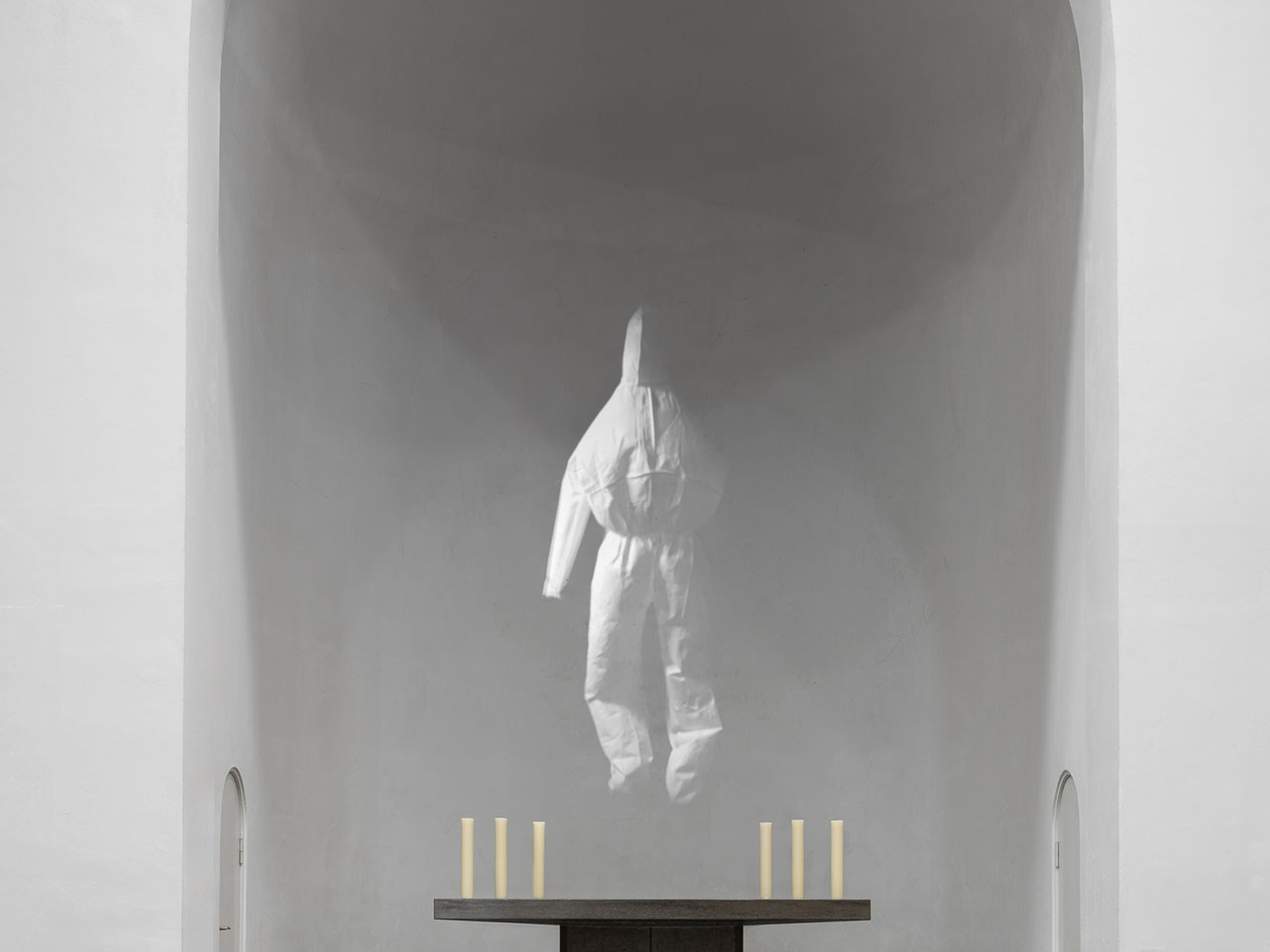
Phantoms – Dominik Lejman St. Matthäus Church, Berlin, January 10, 2026 – February 15, 2026 Curated by Hubertus von Amelunxen photographs: Sonia Bober Images are superimposed on images, moving images on still paintings with geometric foundations. Polish artist Dominik Lejman has been hunting ghosts for three decades. His art, exhibited worldwide, superimposes video images onto abstract paintings. The paintings are briefly inhabited by revenants, phantoms – a disturbing art of alignment, imprisonment, and fall. “Time is out of joint,” says the ghost to Hamlet. In Dominik Lejman's works, people fall out of time into the cracks of the present – a paradox. They are phantoms, belonging to no time, but recurring in every time. Thus, viewing his paintings is like an apparition in which the ambivalence of the familiar and the uncanny is revealed; imprisonment and paradisiacal longing. Dominik Lejman's work is obsessive, its aesthetics following the movement of human existence, its orientation, with a careful mixture of doubt, humor, and despair. His work swings like a pendulum between revelation and repulsion, elevation and fall, Elysium and dungeon. Unique in his combination of content, media transmission, and aesthetics, Dominik Lejman has shaped the question of the possible in the absurd. Being haunted by phantoms means remembering something we never experienced in the present. All the more reason for Dominik Lejman's work to ask us how we deal with our presence and our time, and with what responsibility. The exhibition shows around 20 works from the period between 2000 and the present. An extensive program of readings, choreographies, performances, and lectures accompanied the exhibition. January 13, 2025 Ulrich Loock and Anda Rothenberg in conversation with Dominik Lejman January 20, 2025 Maria Colusi – Performance January 27, 2025 Poetry evening with Howard Altmann February 3, 2025 Performance by Leon Dziemaszkiewicz February 10, 2025 Jazz solo concert by Mikołaj Trzaska
View Project →
Howard Altmann / Dominik Lejman at paintings with projected poems of Howard Altmann, 2019 - Dominik Lejman exhibition
2019Collaboration

Howard Altmann / Dominik Lejman

paintings with projected poems of Howard Altmann

Berlin / New York

Jan 1, 2019

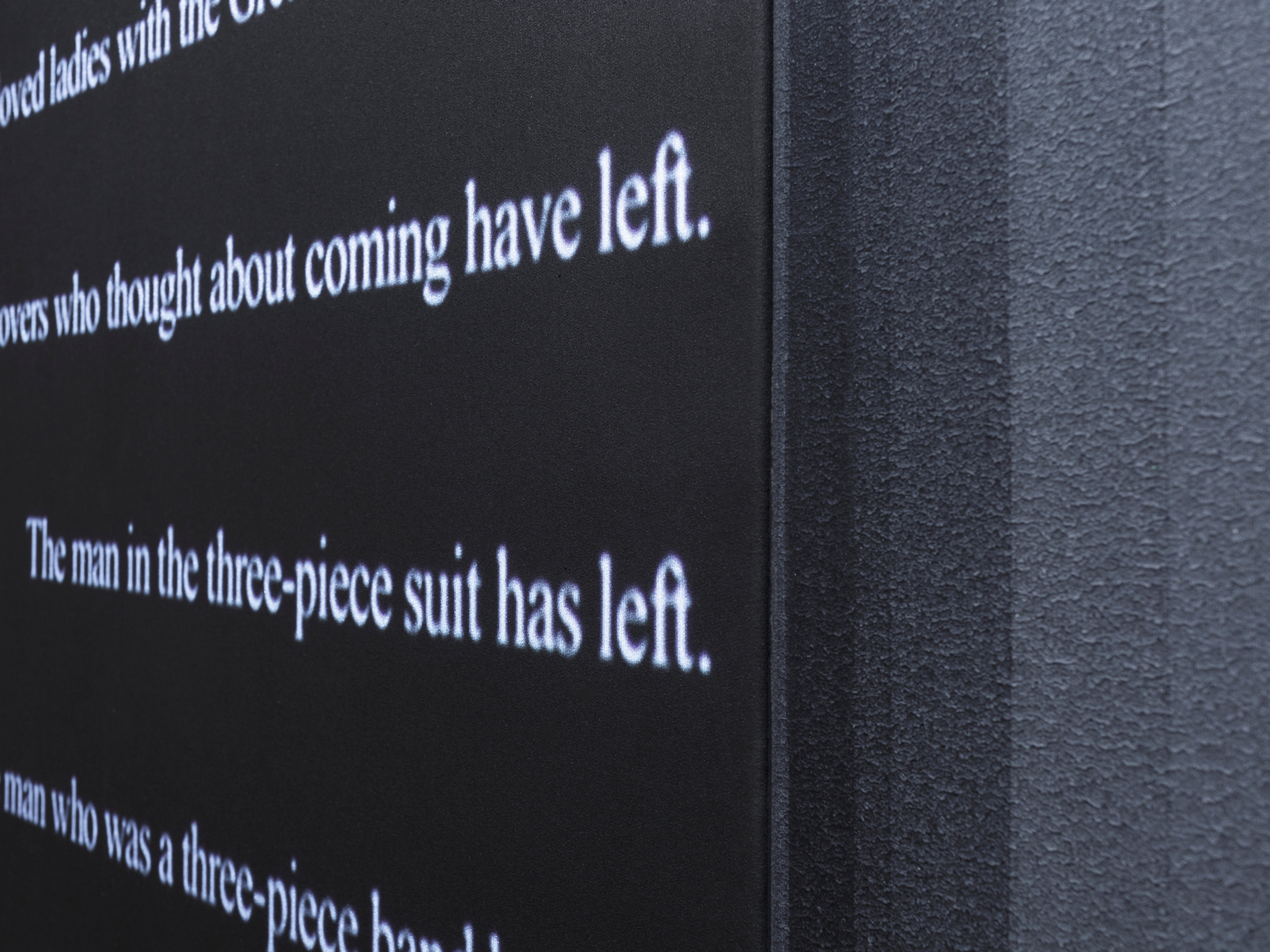
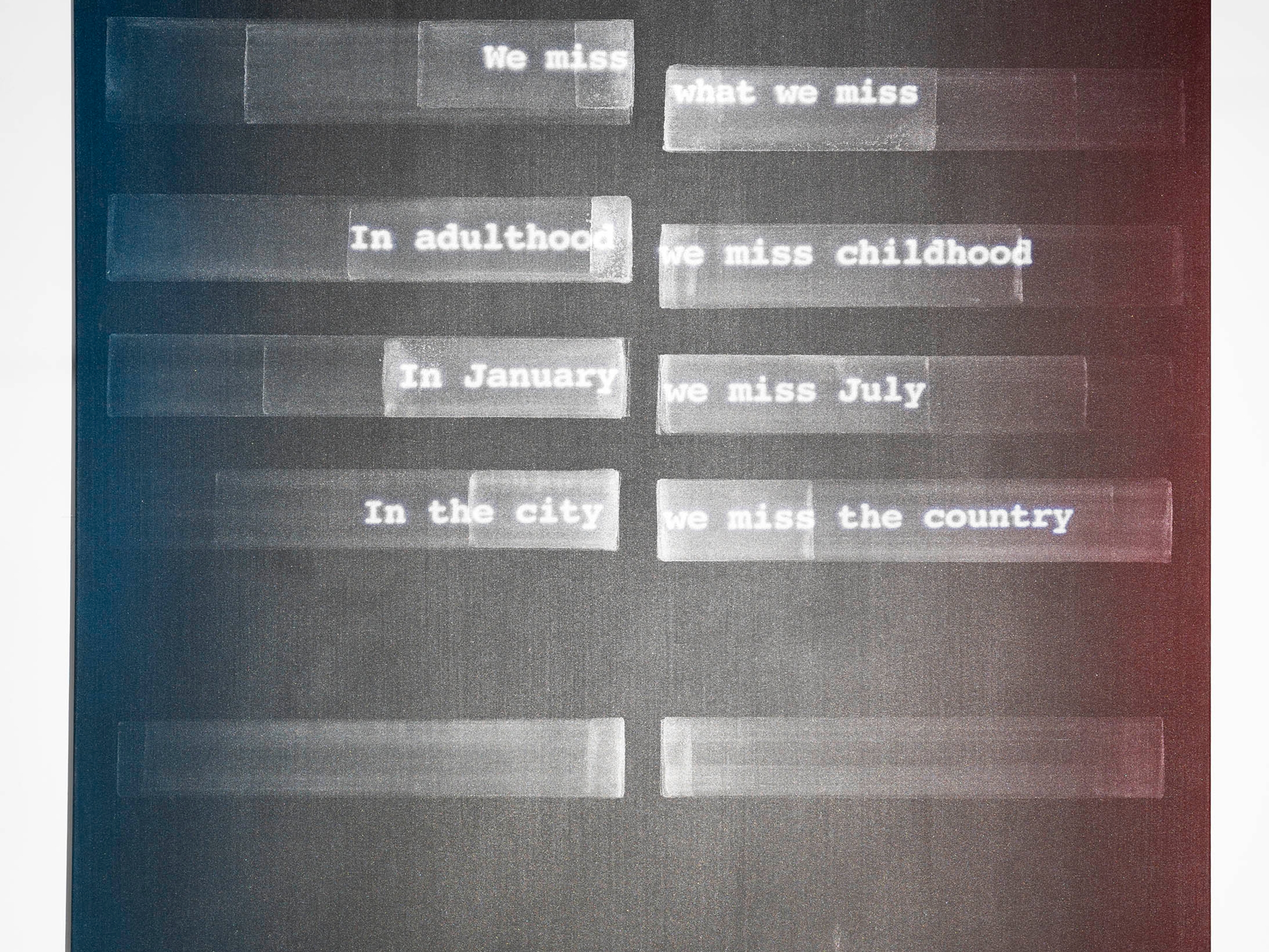
For the past two decades much of my work has animated the painting, the canvas, so that it is the screen for a performative projection. The haptic, painted surface, has provided generous space for light that 'soaks' in the canvas, becoming its integral part, occupying the stage, narrowing the dimensions of the painting. The projected figure, devoid of his/her physical presence, by the means of light interacting with the porous surface, has thus created the representation of absence, crucial to my work. But what if the text becomes the performer itself? Instead of using a figure, why not the use of text? Of poetry. When the text is 'the performer,’ one reads the text appearing on canvas but its pace is governed by the dynamics of the piece. It allows the viewer to engage with a poem in a completely novel way. One can read a poem. And one can listen to a poem. In the former, the reader is the ‘performer.’ In the latter, the text is being ‘performed’ by the speaker. When text is the performer, the poem and the painting support each other, with the distance respectful to both forms of art. They overlap formally, creating an inseparable time-based hybrid. The encounter creates a new entity, where the distance/proximity creates the meaning. It allows poetry to be suspended and exposed in the poem as much as painting is suspended and exposed in the painting (Agamben). Each exposes the missing other. I discovered the poetry of Howard Altmann in Lisbon. In 2019. His original bilingual collection in Portuguese and English – Enquanto Uma Fina Neve Cai/As a Light Snow Keeps Falling (Guerra & Paz 2019) – moved me. So much so that a hybrid between painted picture and performing text was born.. Rather than the visual artist employing text in his/her work, I thought to and have since staged the poem of the other artist. And chose Howard Altmann’s “Words” as the first in a series of his poems, here the last stanza of that poem: We miss what we miss. And in all the missing, a life. And in the life, a mourning. And in the mourning, a story. And in the story, words. The on-going series has been so far completed in 12 paintings

View Project →
PŁOT at 'Macht! Licht' Kunstmuseum Wolfsburg; 'PŁOT' Galeria Arsenał , 2017 - Dominik Lejman exhibition
2017Solo Project

PŁOT

'Macht! Licht' Kunstmuseum Wolfsburg; 'PŁOT' Galeria Arsenał

Wolfsburg, Germany; Poznań, Poland

Jun 23, 2017

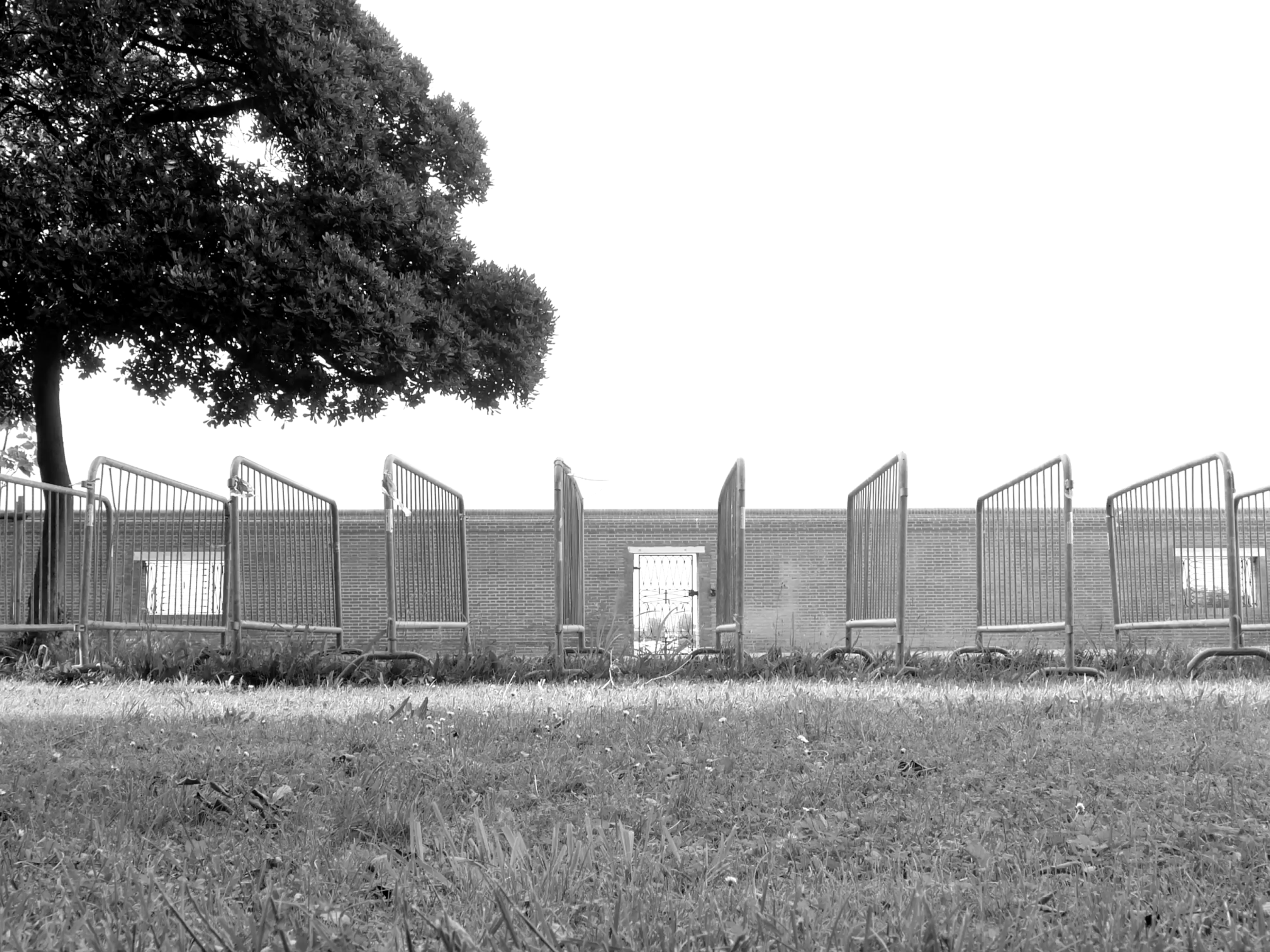
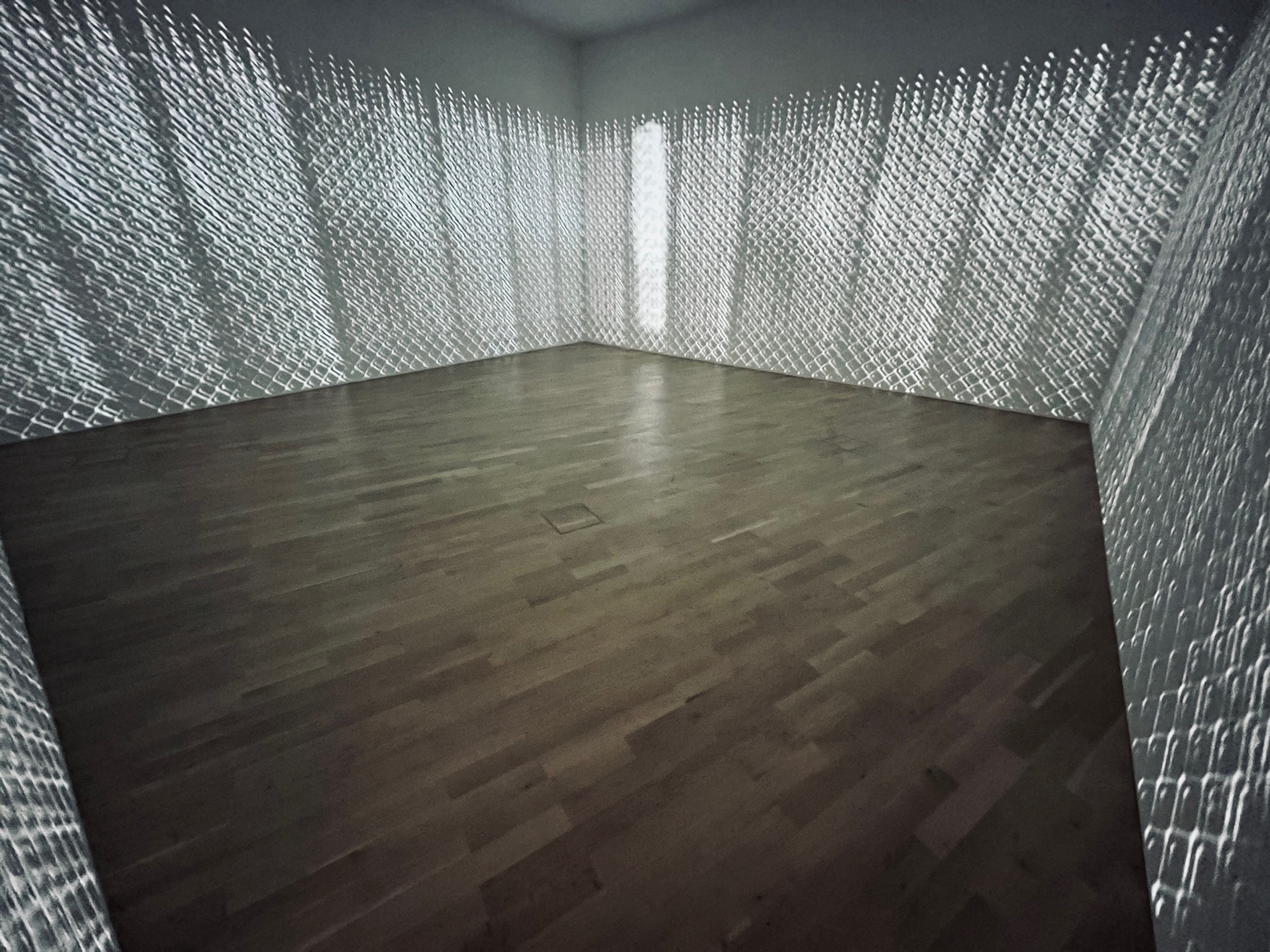
Project: gallery-specific installation, originally project proposal for the Polish Pavilion at the Venice Biennale 2017. In the empty room, “Płot” is a projection “white-on-white,” “screen-on-screen,” in a continuous loop. The projection moves along clean white walls: from the original brightness in full illumination of the interior toward successive covering of the walls by a 360-degree moving image, animated clock- wise by the invisible hand of the artist. During the screening the very first, white layer of projected welded wire fence successively merges with the following one, which is superposed on it to form a configuration of “fence on top of fence (płot na płocie)” until it covers all four walls of the pavilion with an even layer of white light, and thus the fence images disappear unperceptively, becoming a blank field indistinguishable from the background. The projection is cropped in such a way that it does not appear either on the entrance to the room, or on the exit door in the back of the room; thus both openings function as “gaps” in the fence. [Marek Bartelik – from the catalogue text]

View Project →
WSZYSCY at Projection on the façade of the Honorary Tribune, Pl. Defilad, Warsaw, 2016 - Dominik Lejman exhibition
2016Solo Project

WSZYSCY

Projection on the façade of the Honorary Tribune, Pl. Defilad, Warsaw

Warsaw, Poland

Oct 24, 2016

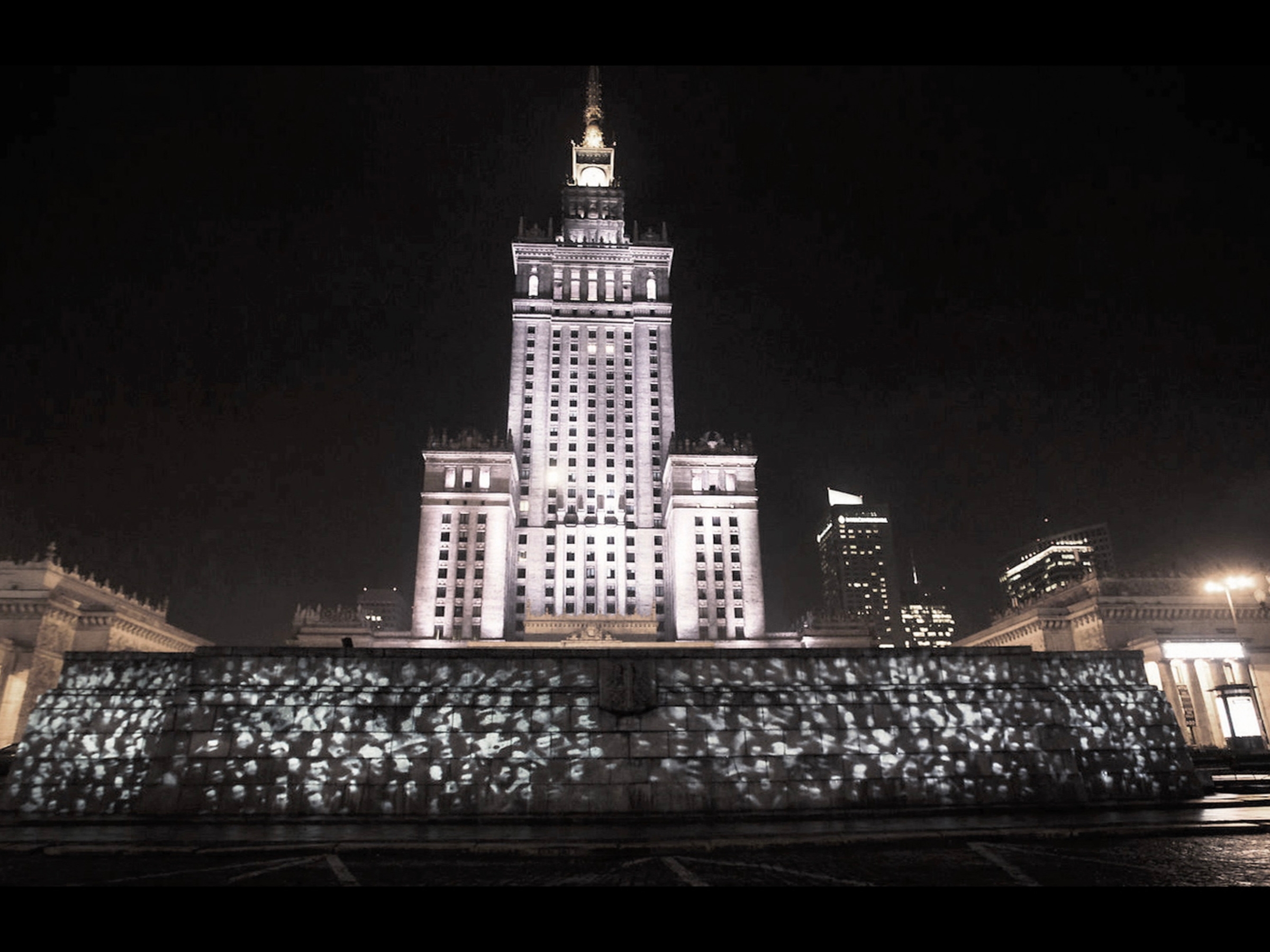
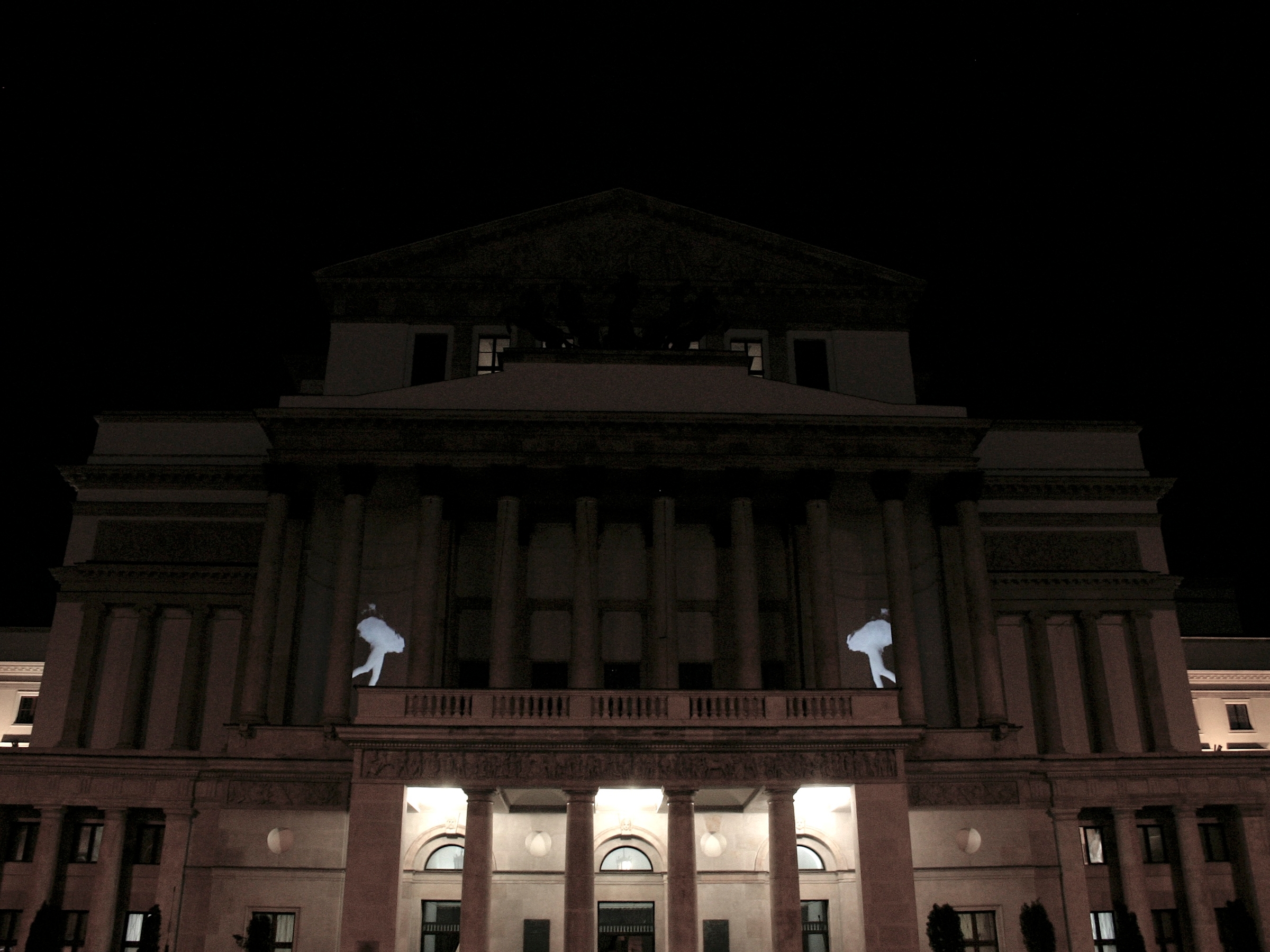
site-specific video-mural The architectural support provides additional historical resonances to the work. The process of projection can be compared to the ‘re-stretching’ of content onto historical frame of architecture. This becomes evident in WSZYSCY (ALL OF US), where the documentary, original film footage from 1956 of the crowd coming to witness the speech of the prime secretary Gomułka, becomes ‘re-stretched’ on the tribune where the actual event happened. This tautological effect generating new meaning is achieved by the historical site-specificity of work.

View Project →
60 sec. Cathedral at The Sky, 2011 - Dominik Lejman exhibition
2011Solo Project

60 sec. Cathedral

The Sky

Toruń, Poland; Tallinn, Estonia; Durham, England

Jun 1, 2011

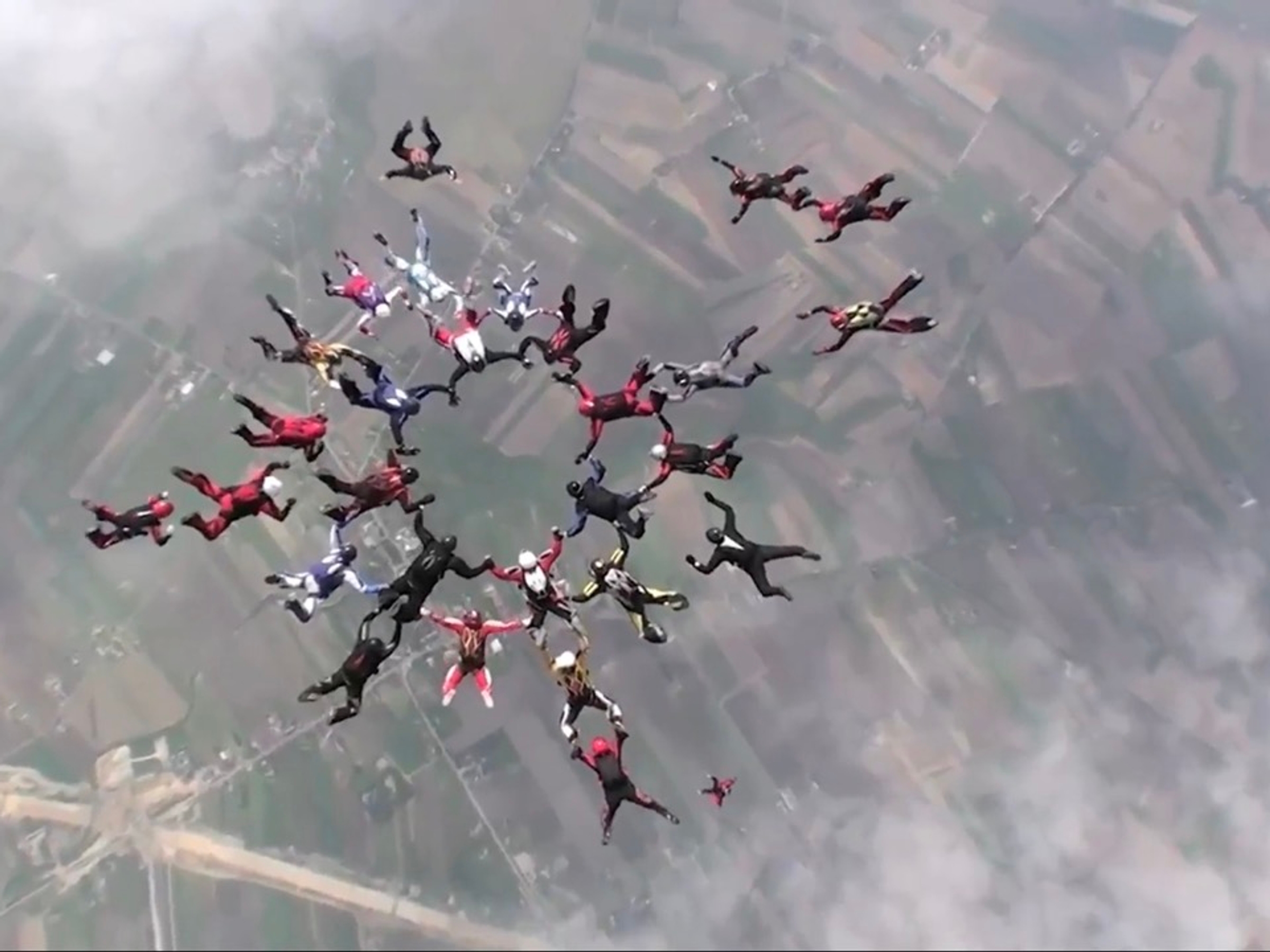
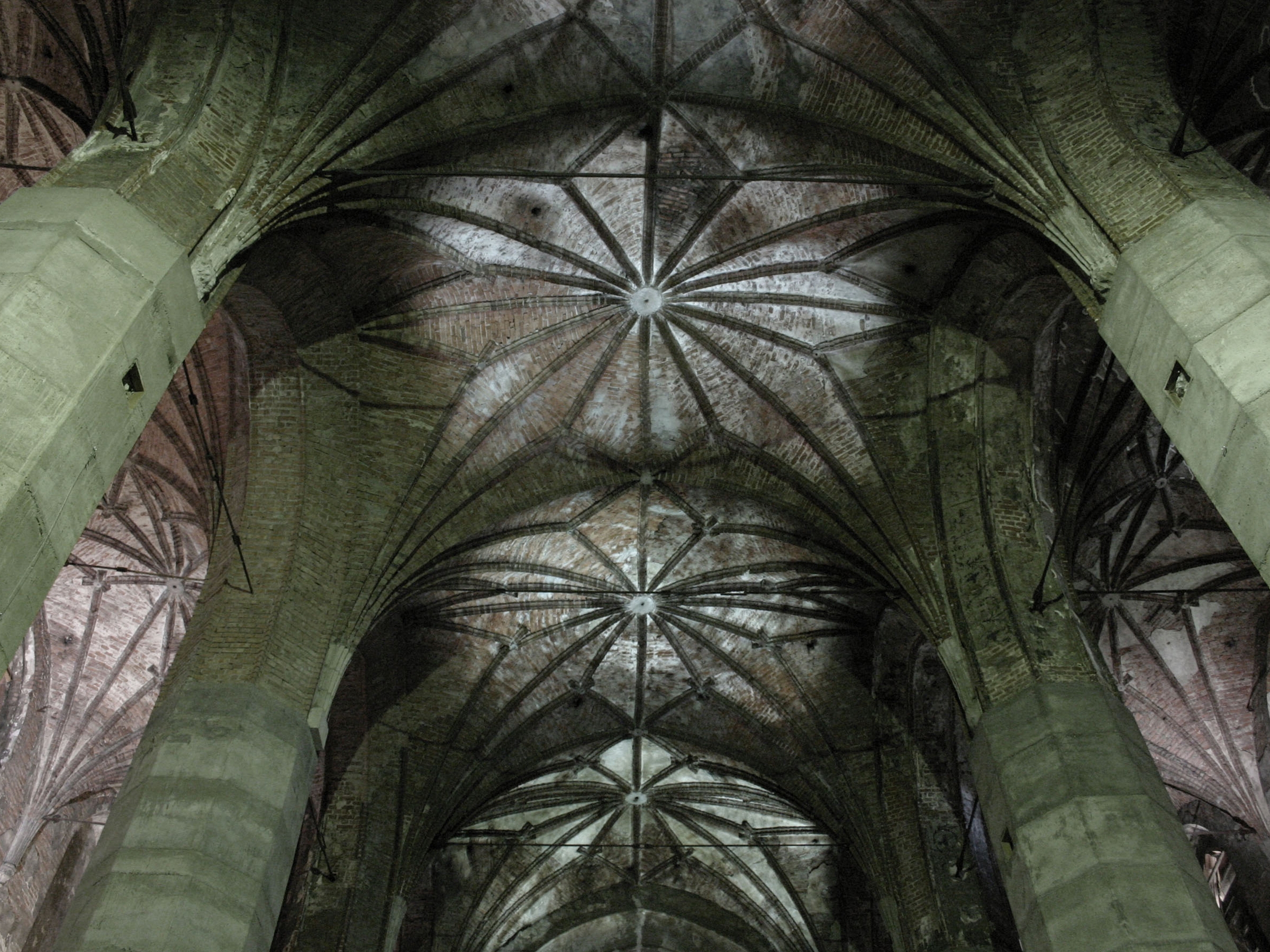
Performative sculpture, video mural. “60 Second Cathedral” is the registration of a group skydiving session by 32 Polish sky divers. This ephemeral sculpture in human material, i.e. the sky divers, was an attempt of recreating the vault of the Durham Cathedral. The medieval Scottish church was built in 1093-1133 as one of the first to feature a rib vault. Falling down from 6000 metres at the speed of 200 km per hour, in the span of had 60 seconds the jumpers joined their hands and feet to recreate the image of a Gothic Durham's rosette. The film registration of this feat and, at the same time, the record of a sky performance, was to be projected on the vault of the Durham Cathedral. Unfortunately, in the end this never happened. “60 Second Cathedral” was presented in other sites, however, engaging with entirely new contexts: in August 2011 in Toruń (Poland), in September in Tallin (Estonia), and in November in Durham, though, sadly, not in the cathedral.

View Project →
Skaters at Andels Hotel, 2009 - Dominik Lejman exhibition
2009Solo Project

Skaters

Andels Hotel

Łódź, Poland

Jan 1, 2009

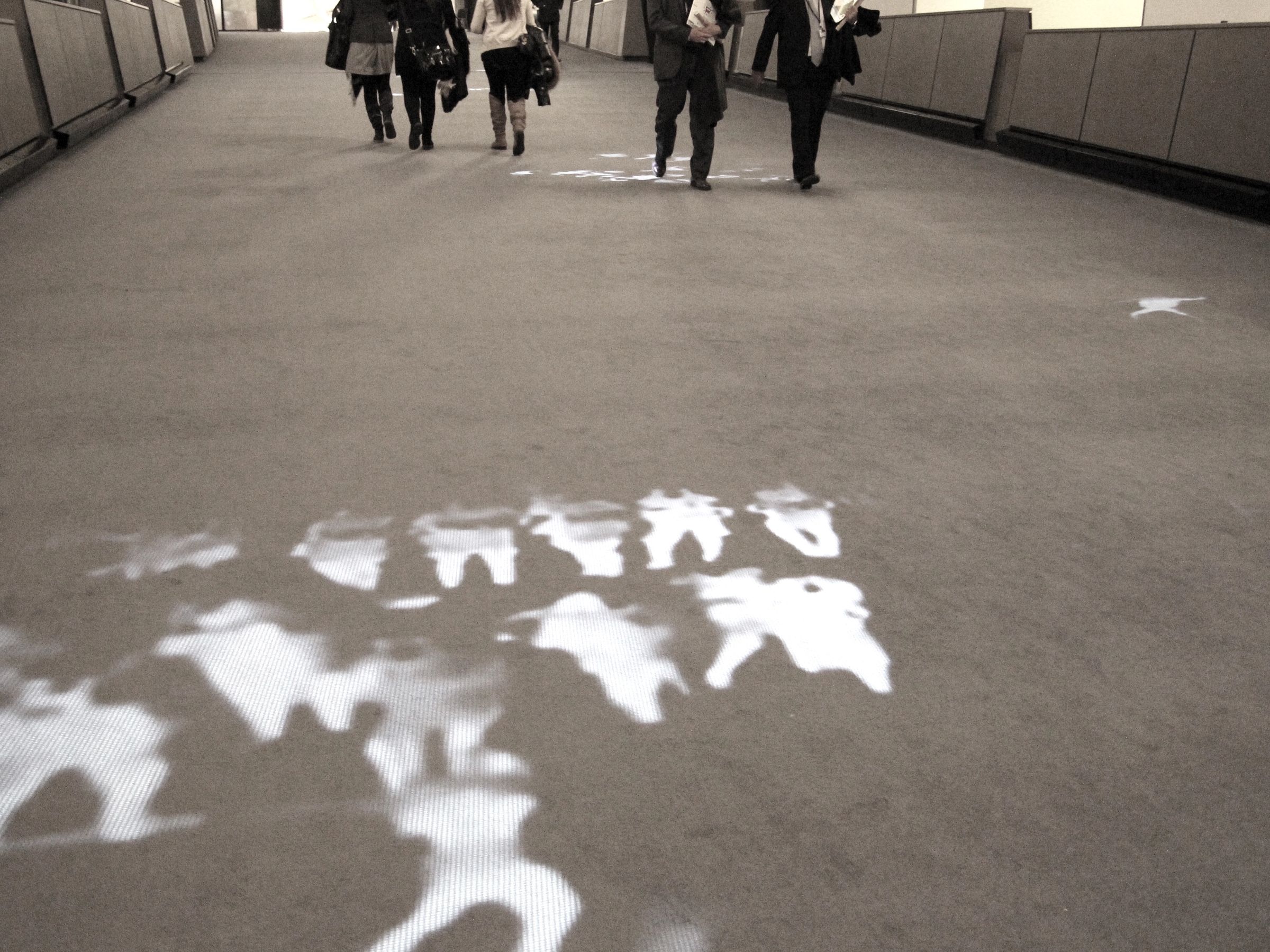
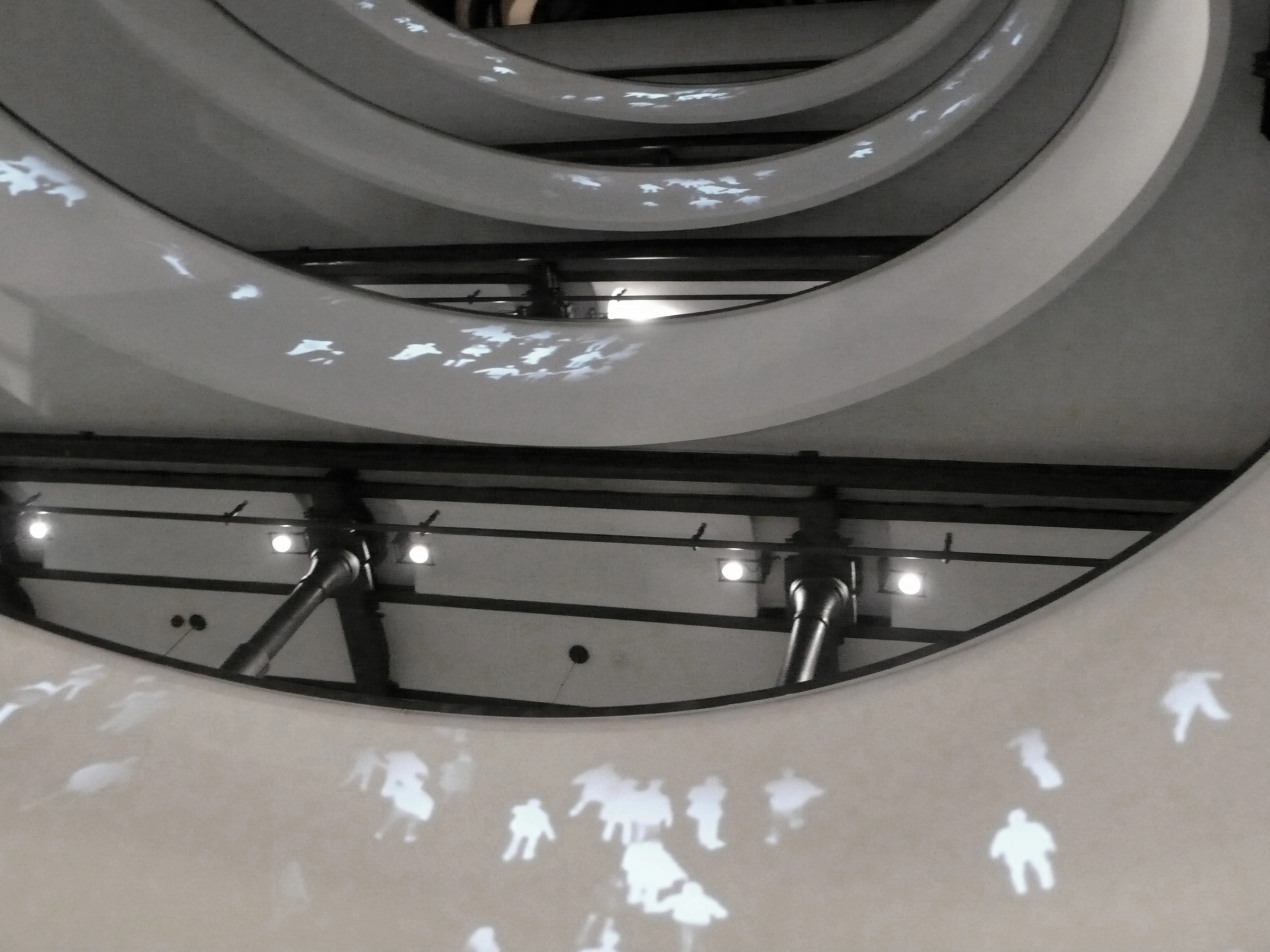
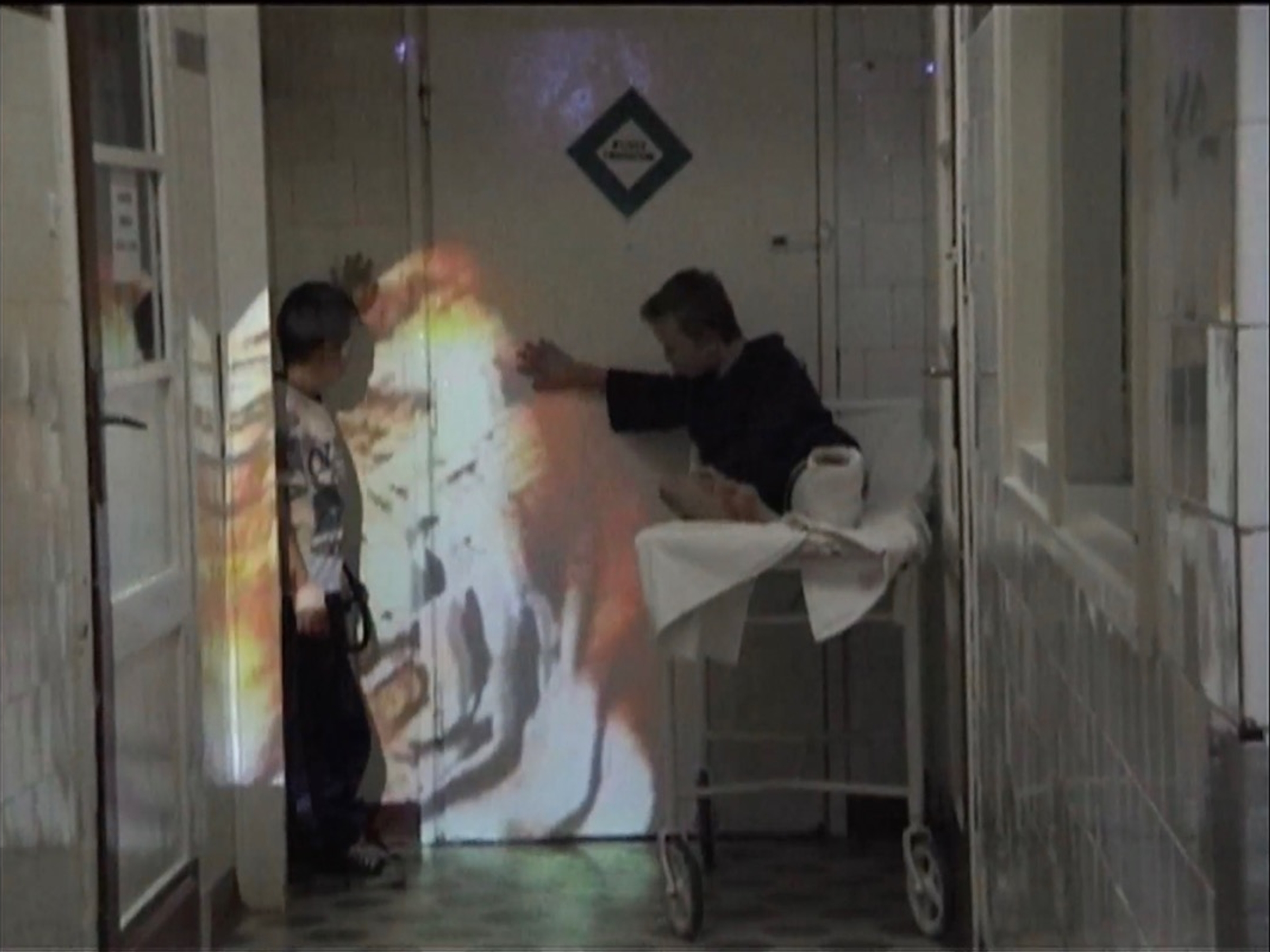
Site-specific video mural. People skating on the Rockefeller Center ring (NY) become projected into a white wall as tiny figures shown in negative: anonymous silhouettes circling around in empty space. In this work, as in many others (to mention “Vital Statistics”, “Gliders”, “Skiers” or “NY Marathon”), people are reduced to the function of an ornament, which Lejman often identifies with the concept of statistics. As a dominant mode of description of contemporary society, statistics transforms the individual into an element of a pattern, a multiplied confirmation of collective fate, a fragment of an ornament adorning the surface of postmodern civilisation (Stach Szabłowski, 2006).

View Project →
Beyond the identity principle at Galeria Sztuki im. Jana Tarasina, 2025 - Dominik Lejman exhibition
2025Solo Project

Beyond the identity principle

Galeria Sztuki im. Jana Tarasina

Kalisz, Poland

Mar 5 - Apr 4, 2025

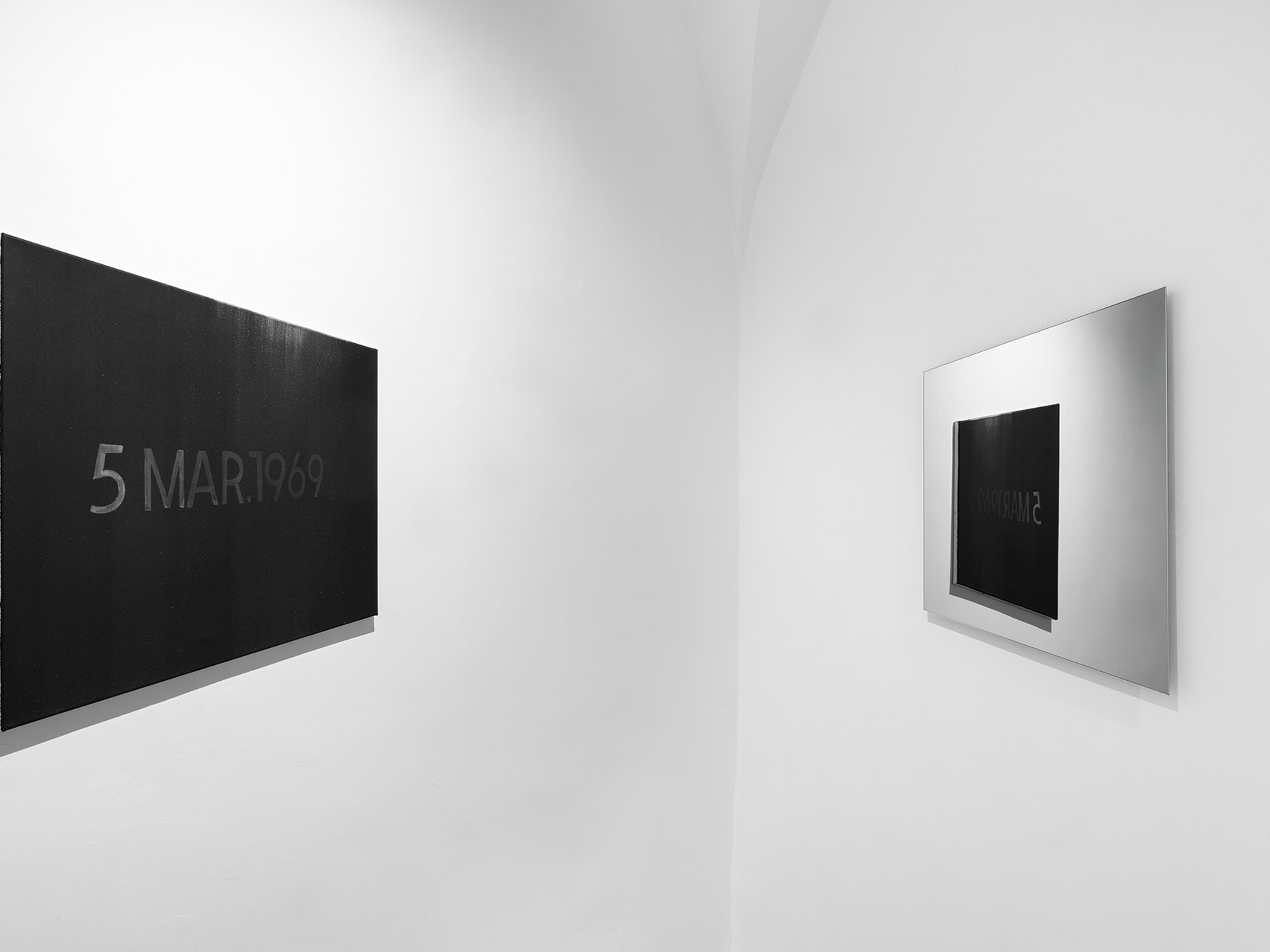
"Beyond the identity principle" Exhibition project curator: Joanna Dudek Contemporary overall visual culture reinforces an obsessive validation through the mirror of identity. Accordingly, identity in art, the identity of the artist, determines the content and its meaning in the artistic mainstream, relegating to the background its potential universality. Based on the optical agreement, the rectangular paradigm, heir to the Renaissance window, as viewers, we expect to place ourselves at the centre. My recent work deals with the reflection upon the unspoken agreement imposing on us such central, patriarchal position. Considering painting, I have always been more interested in the relational phenomenon of encounter with the viewer than the actual content itself. Painting has always been for me the simplest, most effective form of questioning the obvious. Seemingly the most banal gesture of reformatting the rectangular shape of the canvas, depriving the viewer of the illusion of his/her centrality, becomes the starting point for a broader reflection regarding contemporary, unquestionable strategy of representation existing in the art itself as well as in the institutional politics of art. The anamorphosis, introduced in the Holbein's 'The Ambassadors' (1533) - a political painting of its time, is not just a purely optical effect, but in fact a conceptual gesture, making us reflect upon the staffage of the 'official version', flattering our illusory sense of being 'at the centre'. The periphe/real, non-central gaze frees us from narcissistic involvement, enabling critical distance. Identity is not a value in itself. For the artist, it should only be an inspiration that is carefully examined from the sidelines. Dominik Lejman 2025 Photoghaphs: Sonia Bober

View Project →
We Miss What We Miss at Poznań Visual Park, Strzeszynek, 2023 - Dominik Lejman exhibition
2023Solo Project

We Miss What We Miss

Poznań Visual Park, Strzeszynek

Poznań, Poland

Oct 24, 2023

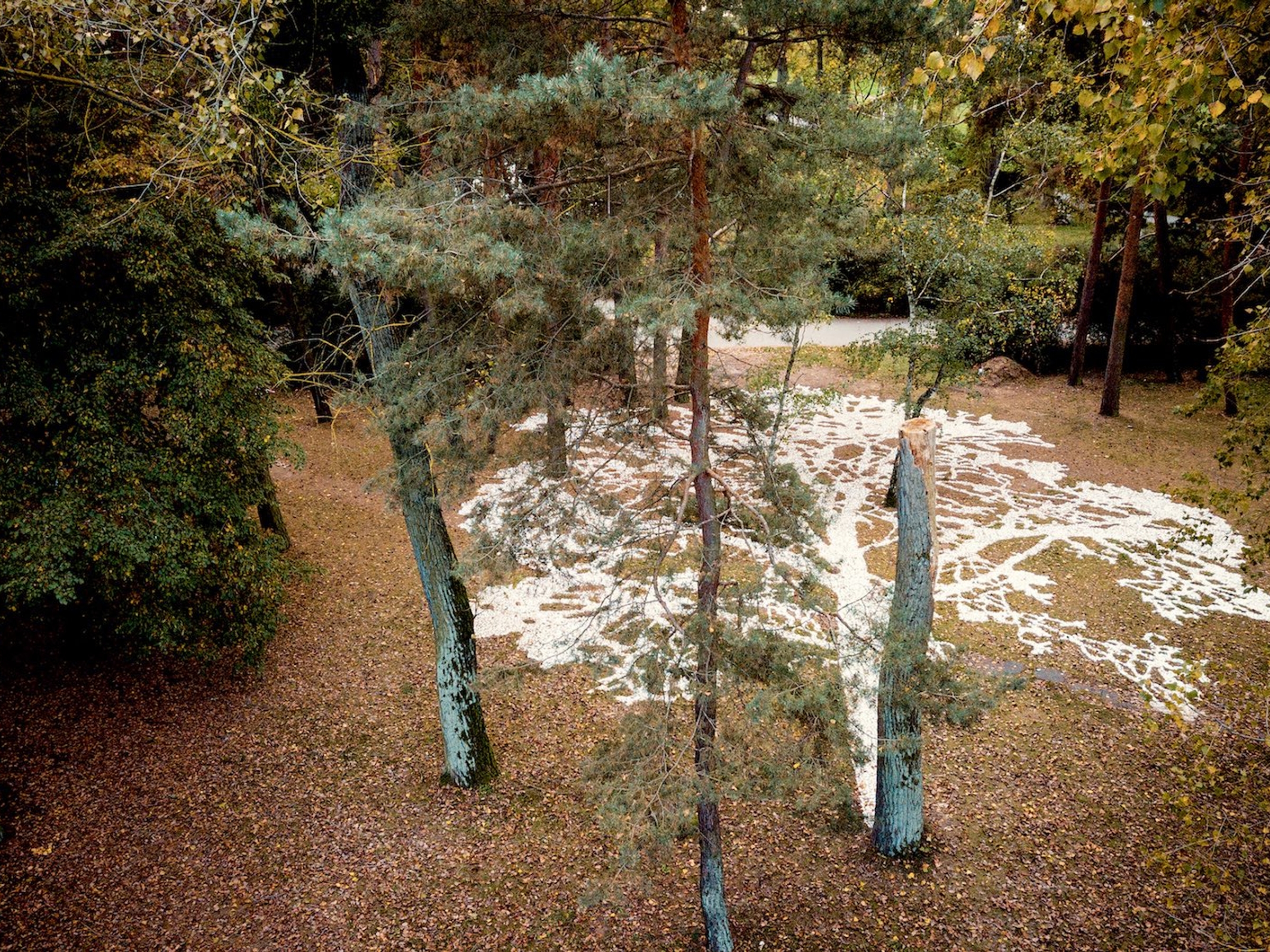
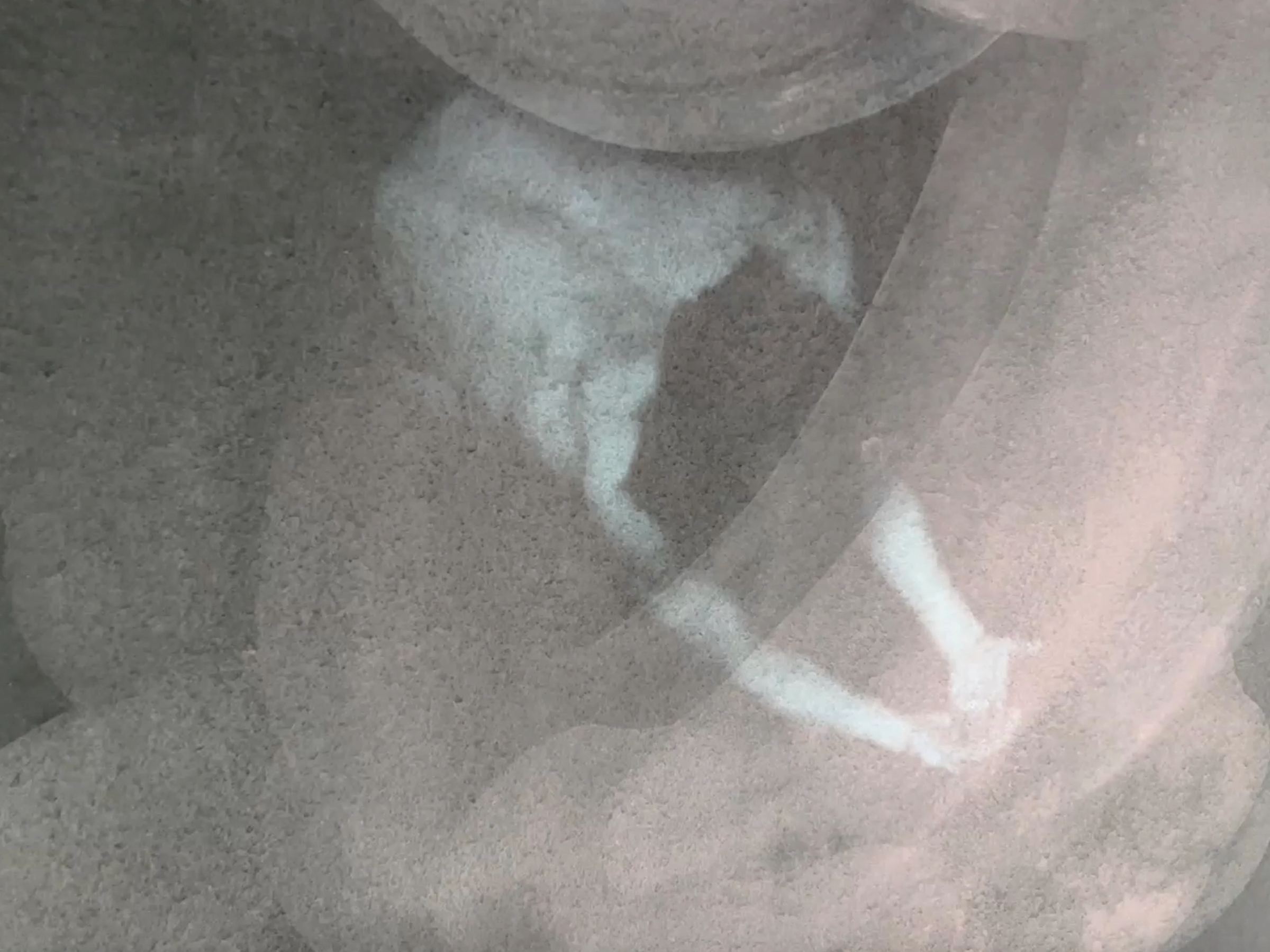
Site-specific permanent installation. Work in the Poznań Visual Park refers in its character to the artist's other projection works. This time, however, it is not projection in the literal sense of the word. The author uses luminophoric substances in the form of small stones, arranged around the trunk of a broken, dead tree in a mosaic drawing, reproducing the negative, glowing shadow of the same tree in its state of bloom. The juxtaposition of the dead trunk and the "mark of the tree's memory", visible at night, is profoundly meaningful, a poignant commentary on our relationship with nature, its transience and degradation, as well as broader existential issues. The additional nocturnal spectacle of the appearance of the image of the tree's shadow ends at dawn with its slow glowing disappearance, to bring back again the white stones visibility among the grass in the meadow surrounding the lone trunk. D. Lejman's work, an apparent projection which is a non-invasive site-specific intervention, is a testimony to the artist's philosophy of the presence of art in public space, understood not as a creation of new, material objects, but rather as a reinterpretation of the existing environment, enabling the viewer to see what is familiar in a new light.

View Project →
Bianca O'Brien/Dominik Lejman REENACTMENT at Chiesa di San Servolo, 2022 - Dominik Lejman exhibition
2022Collaboration

Bianca O'Brien/Dominik Lejman REENACTMENT

Chiesa di San Servolo

Venice, Italy

Apr 23 - May 30, 2022

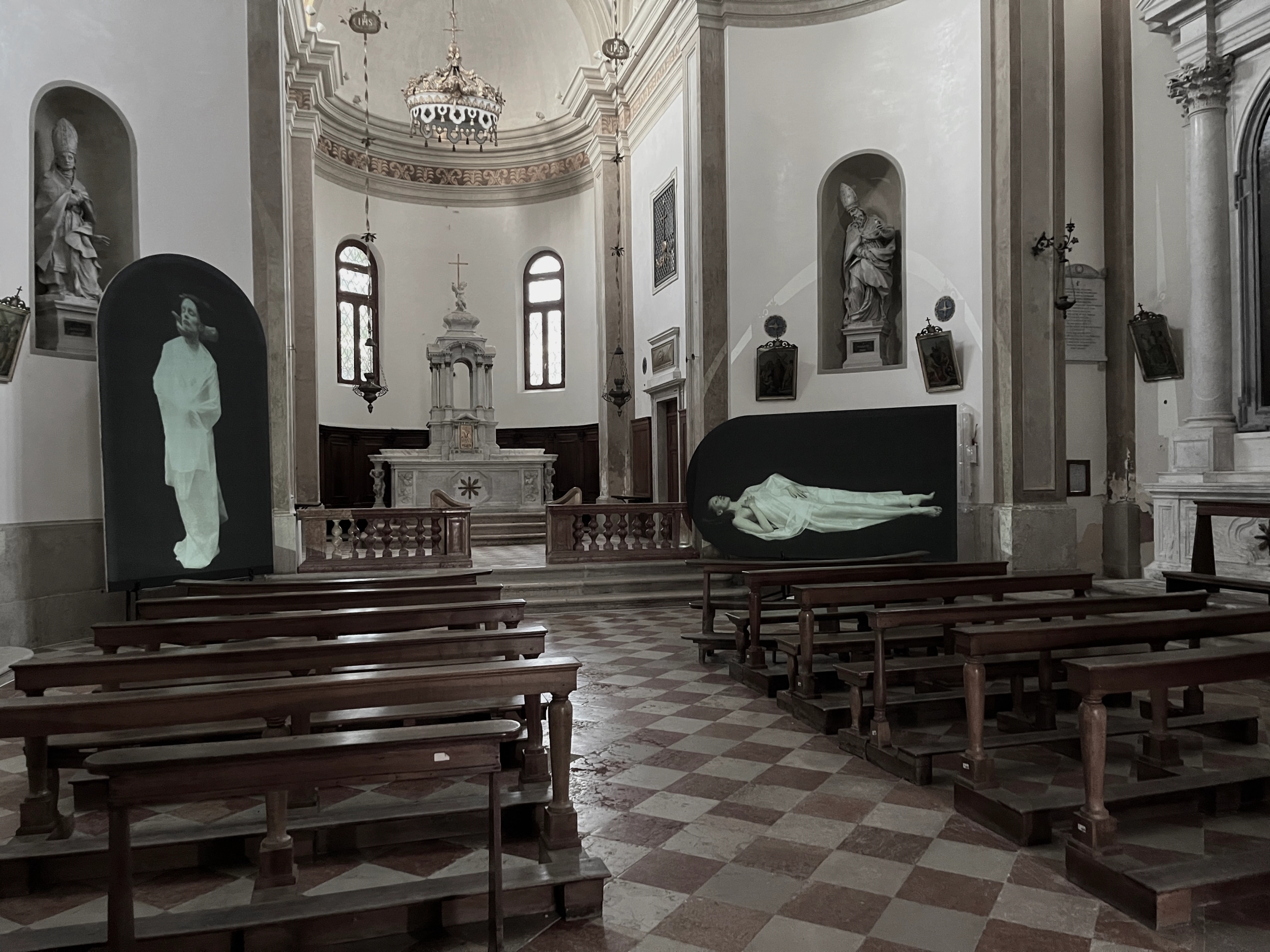
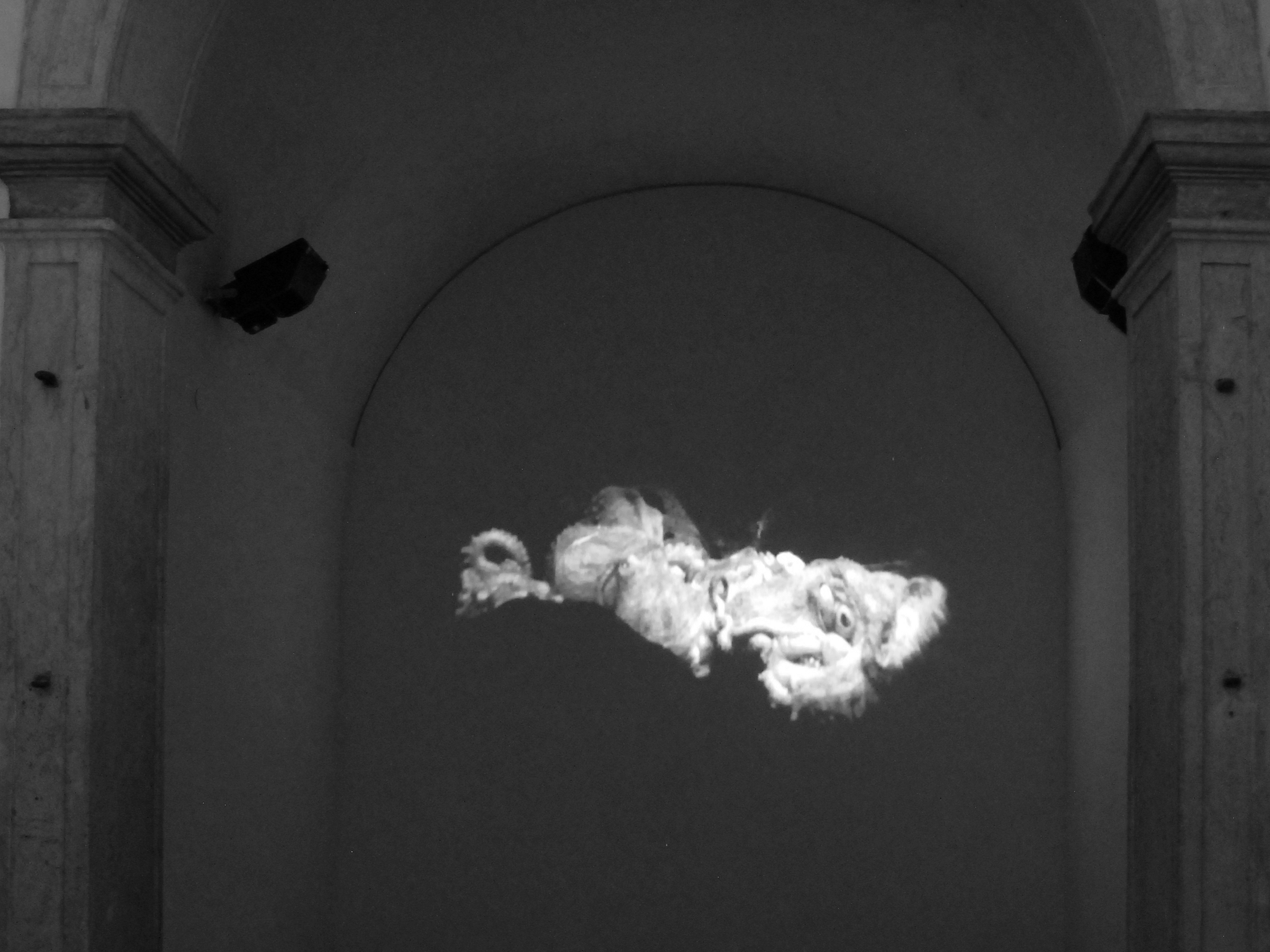
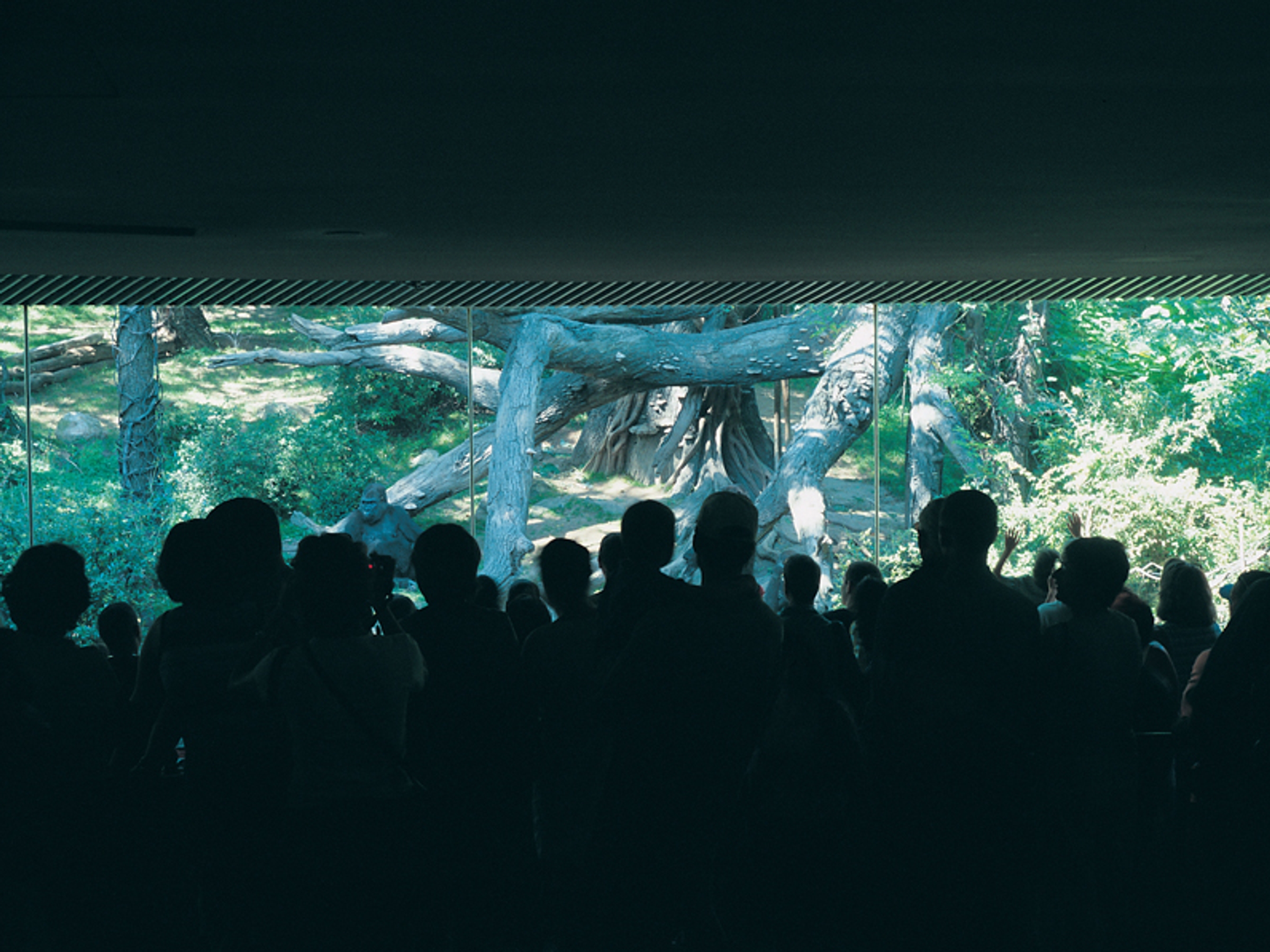
The ongoing cooperation between Dominik Lejman and performer Bianca O'Brien was initiated with works presented at Chiesa di San Servolo during the 59th Venice Biennale (Madnicity Pavilion). Based on the archives of the former psychiatric hospital on San Servolo island, it reflects on the idea of madness as the universal key figure in understanding the contemporary society. Following exhibitions: 'Reenactment' Ostrów Tumski, Poznań, Poland 2023 'Lunatycy/Lunatyczki' PGS Sopot, Poland 2025 A work first installed in the chapel on the island of San Servolo in the Venice lagoon. That Venetian island was a place of madness, an asylum where hands, visible and invisible, restrained bodies and heads, held them in place for the cold eye of the camera; for modern medical science. As it was then. Cameras were slower; movement compromised the image. There was a garden on that island, and in that garden the mad would stand. Or perhaps they would lie. Boats would visit, and from those boats the sane would stare at the mad, who were held in place by the walls and the bars and the water that bounded their garden. So a piece about restraint, then? About bodies and minds locked into place? About hands, seen and unseen? Because what is this work? A woman, presented to our gaze? A madwoman, as we would once have called her? Is this madness, restrained? Well, perhaps. Lejman has described Reenactment as an anagram in video form — the footage runs backward, then forward, but appears to form a seamless loop. O’Brien, his collaborator, is perfectly still before the camera until — briefly — she isn’t. Feel her gaze. Feel it lock on to yours. This work was born in winter, in the chapel beside the dissection room, on the island of the mad. The force of the gaze, of the draped body, and of the stillness — they remain in the work. A body still trapped in place; a mind still straining to escape. And always… Always the hands, guiding everything back into place. Ben McPherson

View Project →
Maria Colusi/Dominik Lejman When painting becomes attitude at Filharmonia Szczecin, 2021 - Dominik Lejman exhibition
2021Collaboration

Maria Colusi/Dominik Lejman When painting becomes attitude

Filharmonia Szczecin

Szczecin, Poland

Nov 24, 2021 - Jan 31, 2022

Although Dominik Lejman has repeatedly invited other artists, poets, performers and even paratroopers to cooperate in his work, the series of works with Maria Colusi is special, oscillating between dance and painting. It cannot be closed within any of these areas, and at the same time, represents each of them. The joint activities of Dominik Lejman and Maria Colusi began two years ago and are still ongoing. This unique collection of little dance forms, based on a logic of a projected loop, each dedicated to a particular painting, grows and expands with new contexts and meanings. However, only their essence remains unchanged: Dominik Lejman's painting as a projection stage and a dance form dedicated to each of the paintings choreographed and performed by Maria Colusi. Alina Kubiak The exhibition at Filharmonia Szczecin was important part of the on-going project 'When Painting Becomes Attitude' completed as a result of a cooperation between Dominik Lejman and dancer and choreographer Maria Colusi. Lejman's paintings serve as the projectable stage for the choreography and dance forms performed by Colusi, dedicated specifically to each painting. Filharmonia Szczecin, Poland 2021 curator: Alina Kubiak

View Project →
Sanguine. Luc Tuymans on Baroque at Fondazione Prada, 2018 - Dominik Lejman exhibition
2018Group Project

Sanguine. Luc Tuymans on Baroque

Fondazione Prada

Milan, Italy

Oct 18, 2018 - Feb 25, 2019

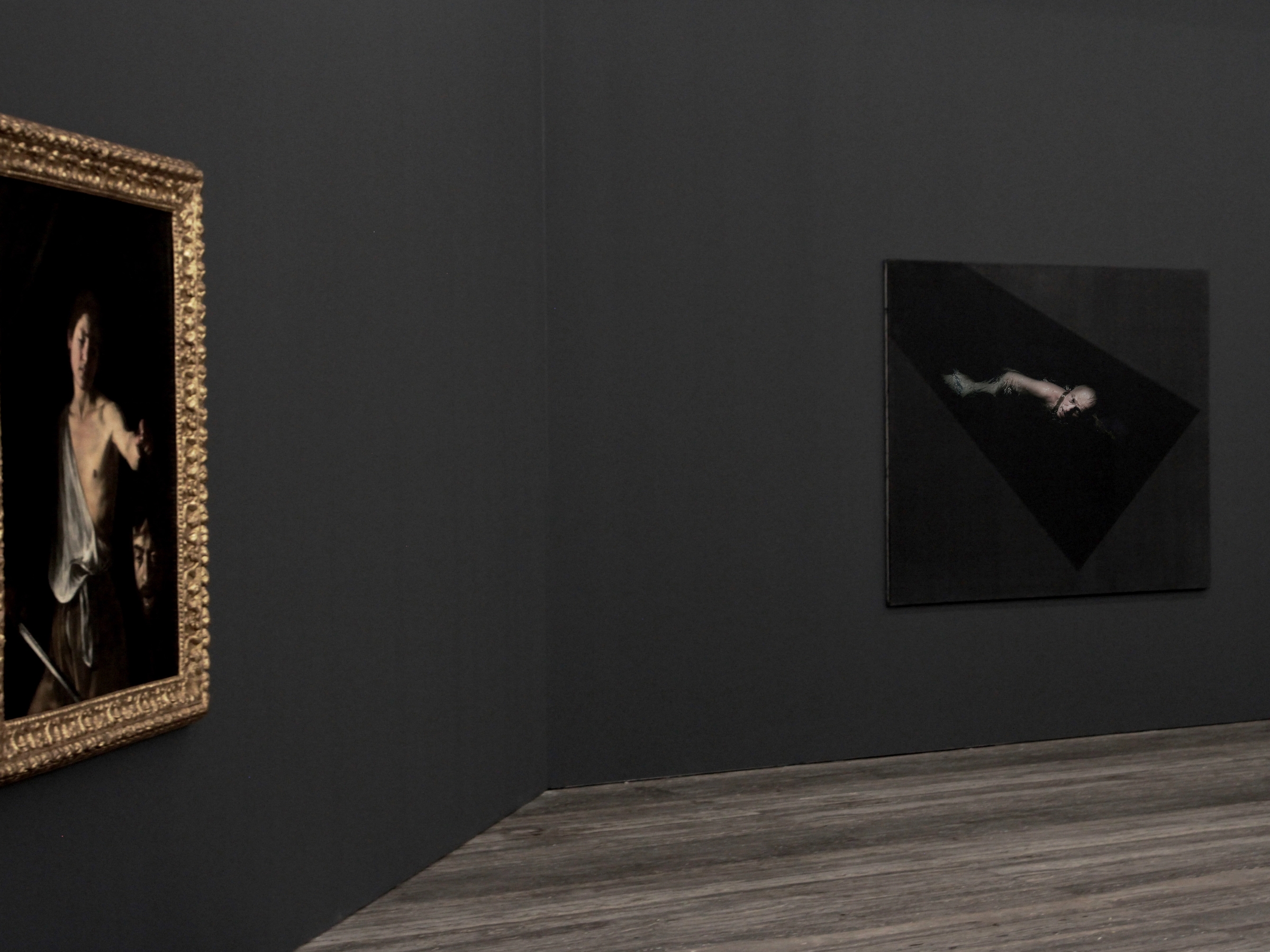
Curated by Luc Tuymans. Organized with M KHA (Museum of Contemporary Art of Antwerp) and KMSKA (Museum of Fine Arts of Antwerp) and the City of Antwerp. “Sanguine” is a personal interpretation of the Baroque based on innovative juxtapositions and unexpected associations of works by contemporary artists and Old Masters. Avoiding a rigid chronological order or a strictly historiographical approach, Tuymans evades the traditional notion of the Baroque and invites viewers to reconsider 17th century art, as well as the contemporary research, by placing artists and their role in society at the center of the exhibition narrative.

View Project →